The COVID-19 pandemic drastically altered our business practices. Manufacturing facilities, workplaces, and establishments had to close due to the months-long lockdown. For this reason, companies shifted towards adopting Remote Monitoring Systems to collect data accurately, track assets, and continuously monitor a facility or equipment condition as in-person monitoring was no longer feasible. In doing so, we can collect massive amounts of data about our essentials using a remote monitoring system without being present 24/7.

In this article, you will discover how powerful Remote Monitoring technology is. Moreover, you’ll also learn how RMS works and get to explore some of its real-time applications in our daily life.

Remote Monitoring System in Simple Words

Remote monitoring is a technology that helps us detect the problems that cause downtime and gives us information about the performance of the system and the hardware involved.

It is not feasible for us to continuously keep an eye on something and prevent disruptions from happening in our system. The word ‘system’ refers to anything like an Industrial Setup, IT facility, Residential Building, etc. Let us understand how these remote monitoring systems work in real life.

How does a Remote Monitoring System Work?
 

It all begins with the IoT sensors, which can capture the data and exchange it continuously over a wireless network or the internet. Internet-of-Things (IoT) is a system comprising sensors, software, and other technology that aids in data communication. Once the data gets collected, it is then transmitted to the cloud, from where the users will be able to access it through their workstation.

 Applications of Remote Monitoring System:

Remote Monitoring Systems are designed to monitor and control large or complex establishments like Telecom towers, Airports, Data Centres, etc. They find massive usage in Solar power plants and automated Fire Protection Systems particularly.

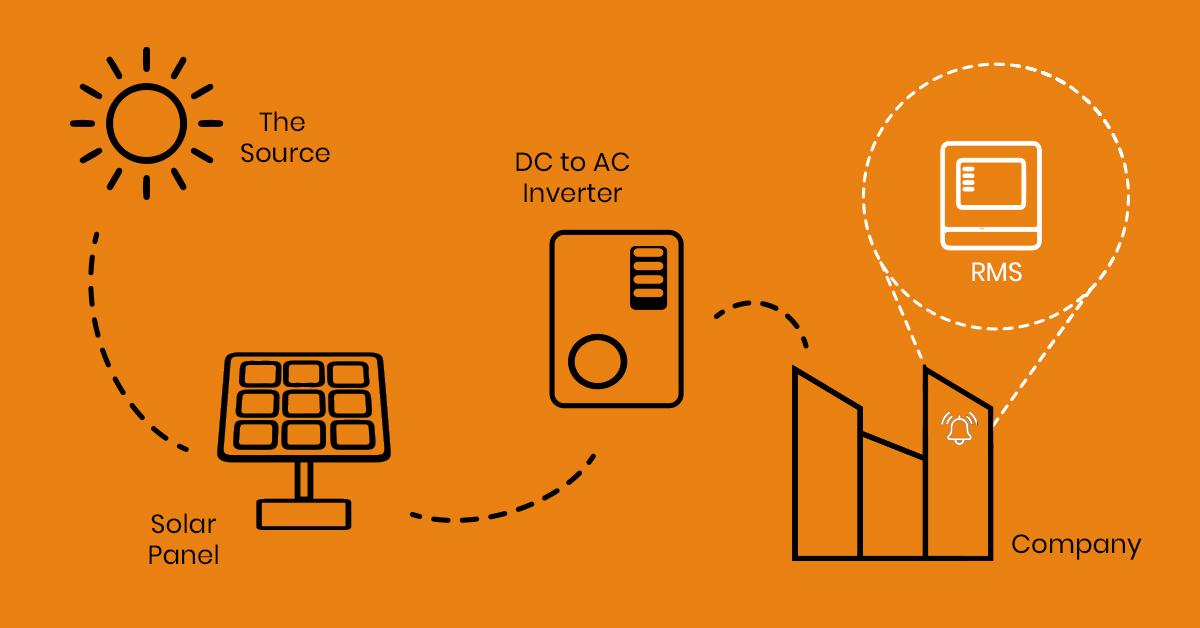
  • In Solar Power Plants: Let us consider the case of an IoT-based remote monitoring system in a Solar Power Plant. The front end generally consists of an array of solar PV panels, which are then connected to the inverter (converting the DC to AC) and fed to a commercial electrical grid. Here, an interface is connected to the inverter that collects data such as the intensity of sunlight, voltage, current, temperature, etc. This collected data is transmitted to the cloud via Wi-Fi for analytics. In most cases, the process of data flow is similar irrespective of the areas of application.
  • Fire Protection: In the case of fire protection systems, what the client expects is to receive immediate alerts or an event trigger, whenever there is a troublesome event (for example, smoke, flames). Activation of buzzers and sprinklers situated throughout the facility and monitoring the situation from a control room is now possible using the remote monitoring systems. The devices like smoke detectors, humidifiers, and heat sensors transmit the signal to an intermediate interface which then forwards the captured data to the control unit. 

What are the Benefits of Using Remote Monitoring Systems?

  • Automates the Data Collection Process:

It is evident that remote monitoring systems have replaced the traditional procedure of manually gathering the data by involving multiple people for a longer duration. Although an initial investment is involved in installing a remote monitoring system at a facility, it eliminates the additional workforce deployed for the data gathering purpose in the long run.

  • Increases work efficiency:

Now that the data collection procedure has become much more manageable. It is quite possible to analyze the captured data and make appropriate decisions.  With RMS, it is easier to avoid any disruptions from occurring and at the same time enhance productivity.

  • Direct Data Collection from the Machines:

By building more insights from the captured data, one can identify the loopholes in the operations and reiterate the operating parameters to achieve a higher level of performance. You can also devise your strategy when the former approach isn’t delivering desired results by analyzing the data.

  • Higher Data Accuracy:

The sensors supporting the remote monitoring system are capable of gathering more accurate data better than before. The obtained accurate data will eventually provide precise results. Based on this, you can forecast or make any further changes in your operating procedure. 

  • Complete Visibility:

Managing a facility from a distance has now become possible using remote-based monitoring systems. Providing total visibility of the operations and controlling from a remote location makes the remote monitoring system more reliable, easy to manage, and secure. 

  • Multiple Alerts for One Event:

The software embedded in the remote monitoring system can be re-programmed to receive timely alerts or updates as per the requirement or when certain conditions are met.

  • The convenience of Data Backup:

Network issues may certainly harm the visibility/ live monitoring of the operations. With RMS, backing up the data will be an alternative for visibility when the server goes down. You will still be able to monitor the captured events from the backed-up data. 

VNT – Providing Industry Leading Solutions:

As inferred from the article, every business and enterprise should consider adopting Remote Monitoring System technology if their current data collection and analysis approach needs to be updated. After all, utilizing advanced technology that is available to us is a wise business-conscious decision.

VNT, with its comprehensive and sophisticated solutions, can help with this. Aiming to become the world’s leading engineering company, VNT strives to make its name by providing innovative solutions and unrivaled services under the following business verticals: Solar, Telecom, Fire Safety, and Earthing.

If you would like to see for yourself how VNT India can help you simplify support and put customers first, write to us

Generating electricity using Solar panels is a clean and green way of energy production as it involves no release of emissions into the atmosphere. Over the recent years, Solar energy applications have gained momentum and will continue to do so in the upcoming days.

Installation of Solar panels at the workplace, residence, or industry certainly helps combat the rising electricity bills and dependency on fossil fuels. In this blog, you will discover what a Solar Distribution Box is and what role it plays in a Solar power plant installation.

For the installation of a Solar power plant (rooftop system) the Direct Current Distribution Box (DCDB) & Alternative Current Distribution Box (ACDB), are the two pivotal functioning components of a Solar power grid.  Why? you might ask. To understand this, let us dive deeper into the science behind it.

Is a Direct Current Distribution Box (DCDB) the heart of a Solar Panel?

A Direct Current Distribution Box also referred to as (DCBD), acts as an interlink between the Solar panels and the inverter. When the Solar panels convert the Solar energy to DC, in such a case, we use the DCDB to control the received DC from it.

The output of the DCDB is an input for the inverter. Besides, it also acts as a protective device as it contains an SPD (Surge Protection Device), MCB (Miniature Circuit Breakers), and Fuse. Moreover, the fuse is installed internally to avoid voltage spikes by directing the excess charges to the ground. Thus, it protects the Solar panel strings and Solar inverter from incurring damage. DCDBs come in different sizes based on the load.

Functioning of a DCDB:

  1. To begin with, based on the number of strings of solar panels used in a solar plant, DCDBs are customizable for multiple configurations.
  2. The enclosure of a DC distribution box is typically a thermoplastic IP65 rated (Polycarbonate). 
  3. In general, input for the DCDB includes incoming positive and negative DC cables from a DC combiner box, further connected to the MCB and SPD.
  4. Whereas, the output for DCDB includes outgoing positive and negative DC cables to the inverter. Sometimes, a DC isolator may be used instead of a DC circuit breaker. For controlling the DC power at output, suitable capacity of MCB or MCCB must be utilized.
How Different is an AC Distribution Box from a DC Distribution Box?

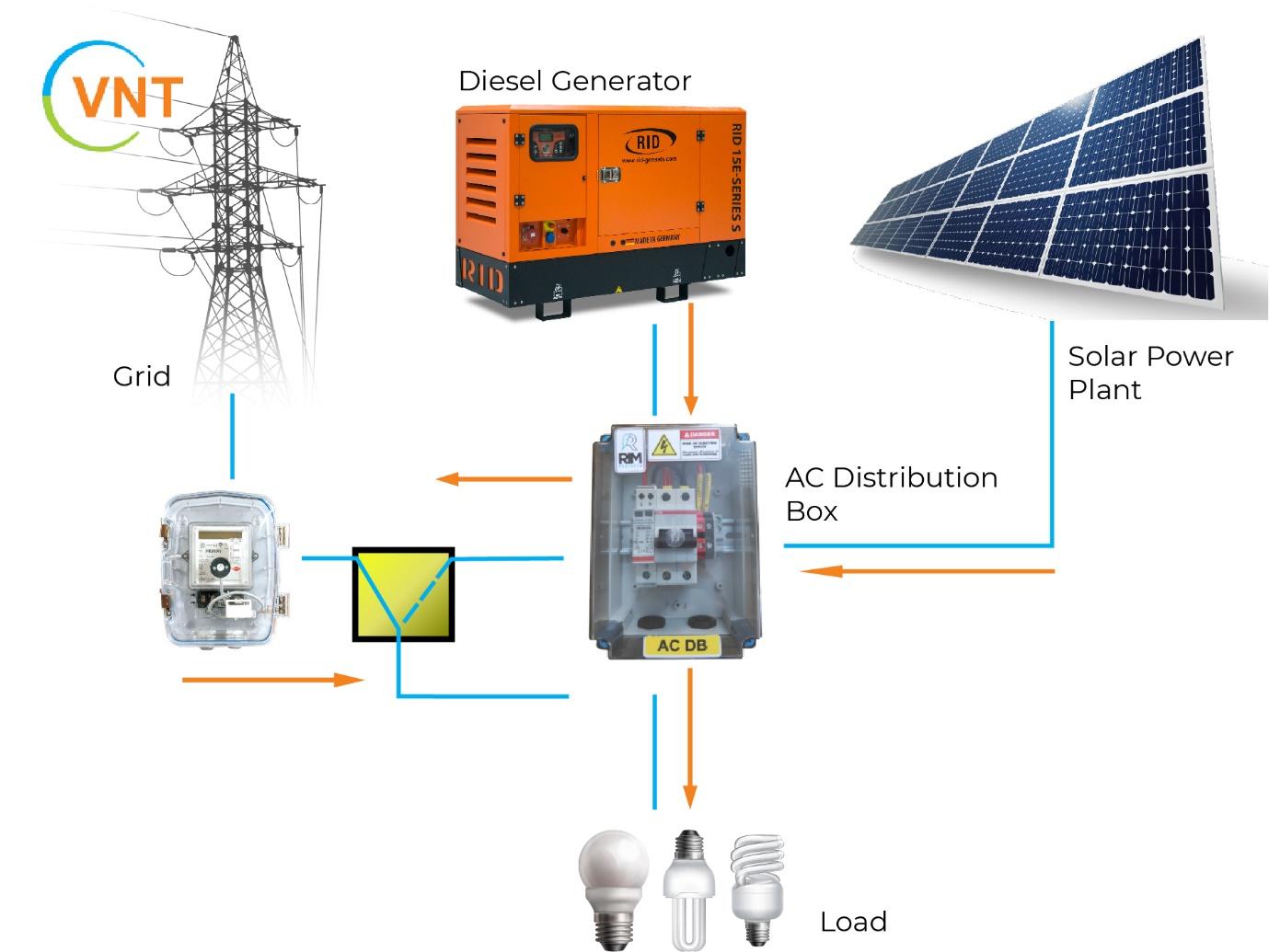
Unlike DCDB, the ACDB receives the AC power from the Solar inverter and directs it to the AC load via the distribution board. In essence, it divides the primary power information and converts it to the adjacent power units. Within the enclosure of ACDB, we have a Surge Protection Device and MCB to protect the inverter from voltage spikes or any damage. ACDB comes in different sizes; based on the load and the inverter capacity.

The modern solar ACDBs are capacitated with a technology that enables us to monitor power consumption from the solar plant.

Functioning of an ACDB:

The enclosure of an AC distribution box is also a thermoplastic IP65 rated (Polycarbonate).

The input for the solar ACDB includes an incoming (single-phase or a three-phase) cable from the solar inverter, which is then connected to the MCB and SPD. On the other hand, the output for ACDB includes a set of outgoing cables to the AC distribution panel.

Diagram

Description automatically generated

Mounting Options:

Since clients’ requirements are dynamic, both the solar ACDB & DCDB boards are designed with various mounting options such that the client’s needs are met. Mounting options such as Indoor Type (Standing), Outdoor Type (Standing), Wall Mounting, Pole Mounting, etc. are widely popular today.

General Specifications of Solar Distribution Boxes:

A picture containing text, indoor, shelf

Description automatically generated

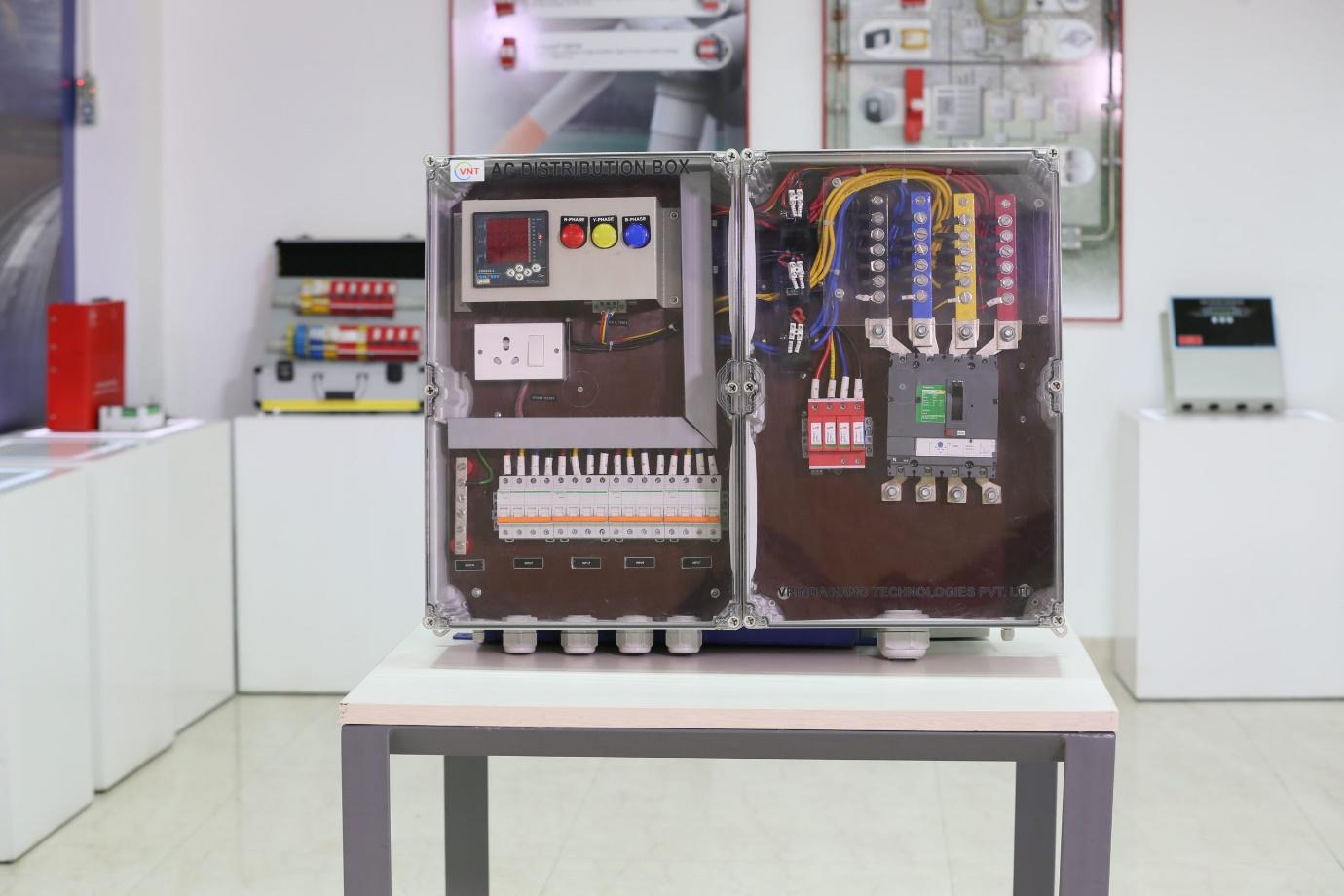
1. AC Distribution Box:

  • Tested & Verified as per BIS, IEC & IS Standards.
  • Available in ABS or Polycarbonate or CRCA enclosure for reliability against adverse weather conditions.
  • Multifunction meter with current, voltage, power, frequency, etc.
  • MCCB/AC disconnector is inbuilt for protection.
  • Rated IP 55/65/66/67.
  • Fully customizable based on customer requirements.
  • Input & Output: Single Phase, Three Phase

2. DC Distribution Box: 

  • Tested & Verified as per BIS, IE & IS Standards.
  • Fully customizable based on customer requirements.
  • DC Switching: DC isolator / DC circuit Breaker for DC disconnection purpose.
  • Available in CRCA or Polycarbonate or FRP Enclosure for reliability against adverse weather conditions.
  • Rated IP 55/65/66/67.
  • Input & Output: 1 in 1 out, 2 in 2 out, 3 in 3 out, etc up to 10 in 10 out.

Need More Help with the Solar Distribution Boxes?

Choosing the right Solar Distribution Boxes based on a company’s requirements, specifications, and quality can be quite challenging. Being the key manufacturer of solutions for utility-scale projects since the inception of our company has provided us with expertise to engineer the best-in-class Solar AC Distribution Box for the Solar panel needs of enterprises. 

VNT is here to assist you in providing the best advice for your business and sophisticated products in the field of Solar technology, Telecom, Fire safety, Lightning & Surge Protection, etc.

For more information about VNT India’s Products and services, visit https://vnt.in/.

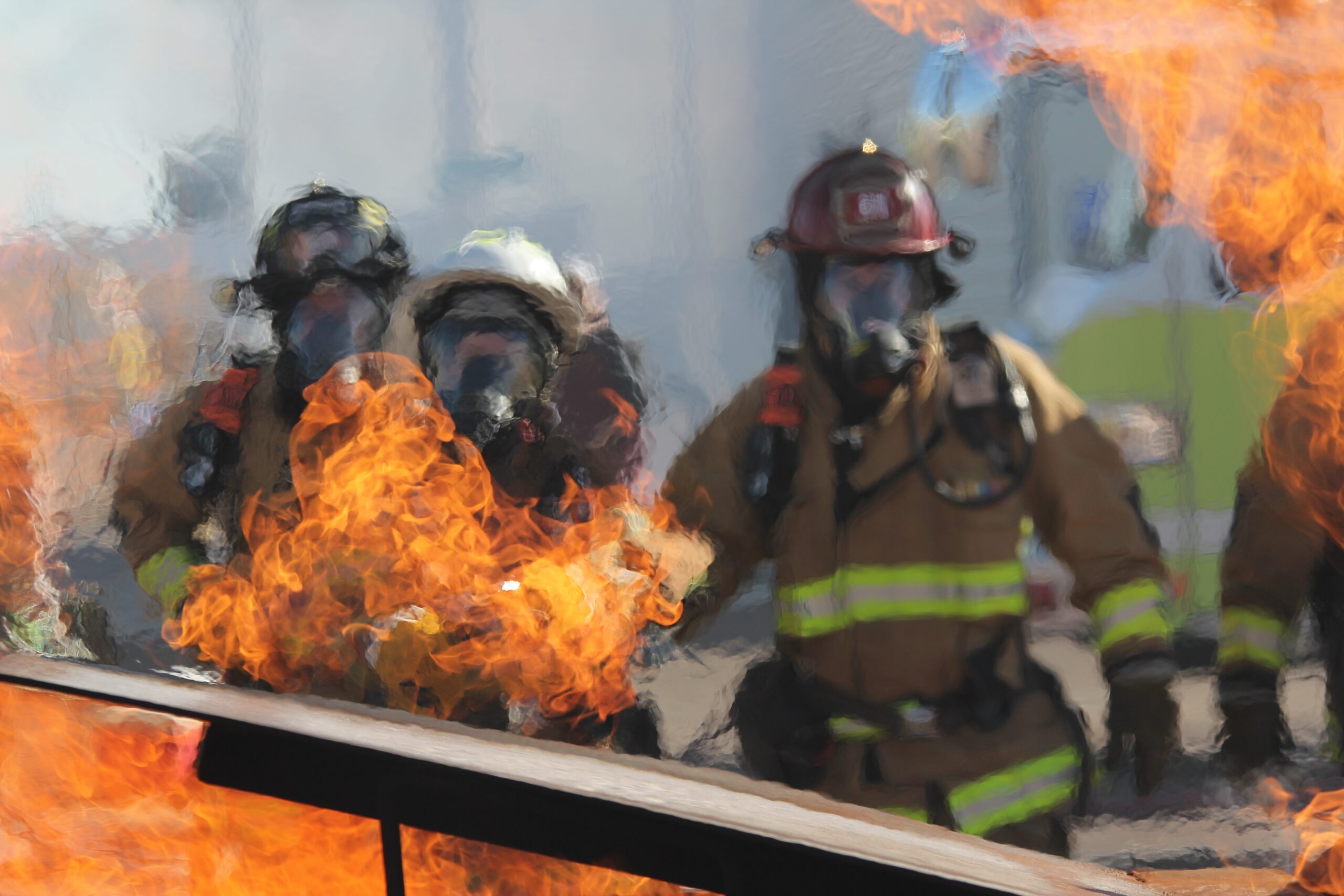
A fire can happen anytime; one tiny spark can catapult into a catastrophic fire tragedy in split seconds. The recent massive fire at Serum Institute of India has drawn people and corporations’ attention to the importance of installing appropriate fire safety equipment to protect their crucial personal and commercial assets.

The fire at the world’s largest manufacturer of Vaccines on Jan 22 resulted in over Rs. 1,000 crores in collateral damage and the loss of five lives. The fire, which was started by an electrical spark in an under-construction building, became rampant and required numerous fire tenders, water tankers, firefighters, and other fire fighting equipment to put out the flames for several hours. Because of their effective fire safety plan and fire accident preparedness, the company was able to keep the fire from spreading to other nearby buildings. Furthermore, the installation of fire safety equipment in their other buildings would have prevented any further mishaps. Because such events cannot be predicted or prepared for in advance, fire safety equipment must be installed to protect one’s assets.

Fire incidents should not be viewed solely as a financial loss; they tarnish the company’s reputation in the industry, erode customers’ faith in the organization, and harm employee morale. This kind of suspicion leads to a reduction in sales. Accidents involving fires disrupt business operations and put employees at risk. To establish comfort with and reliability in clients, a company’s reputation should be synonymous with safety.

What is Fire Safety Equipment?

Fire Safety Equipment are devices or systems used to manage and control fires and the damage they cause. Every business must have adequate, fully functional fire safety equipment as a legal and moral obligation. To ensure the safety of all employees and workers in a fire, the government has made this a mandatory requirement.

Why is Fire Safety Equipment Required?

In some circumstances, early fire control and isolation can save the workforce and resources in hazardous situations. The installation of fire safety equipment is critical for reducing these dangers.

Because of the nature of the work environment or the manufacturing processes used, particular industries are more prone to fires. Human casualties are much higher when fires occur in hospitals, hotels, cinema halls, museums, and other places where people are unfamiliar with the premises. Even with practical fire escape routes, this poses a risk to evacuation and rescue operations. A fundamental aspect of building a workable fire safety plan is to introduce measures informing the location where the fire started and address the installed active fire control systems.

Leading Causes for Fire Hazards in the Industry

Any spontaneous fire in industry causes a net income depreciation. In addition, repairs and replenishment costs required for the destroyed property negatively impact the company’s net profit.

  • Electrical fire hazards like overloaded outlets, damaged or overhanging power lines and exposed wiring.
  • Flammable liquids like solvents, paint thinners, gasoline etc.
  • Compressed Gases.
  • Hot work like Welding, soldering etc.
  • Overheating of equipment and machinery.
  • Flammable raw ingredients and combustible dust.
Types of Fire Safety Systems

In India, there are several different types of fire safety systems. Each system is designed for different kinds of fires and environments. The choice of appropriate equipment for your home or business can be overwhelming. The following can help you select the equipment that best suits your needs if you have the same dilemma.

  1. FIRE SUPPRESSION SYSTEM:

While the aforementioned types of equipment are adequate for protecting your home, traditional fire safety methods have proven inadequate for residential complexes (particularly high-rise apartments) and large-scale industries. Traditional fire safety solutions have the disadvantage of requiring a trained professional to use the equipment in the event of a fire. The following two issues arise as a result of this:

  1. A skilled professional may not always be available. This scenario is especially true in the current pandemic, where businesses and industries may be forced to close for an extended period.
  2. To douse a fire, one must approach the source of the fire, which can be dangerous at times because fires are notoriously unpredictable.
Due to shortcomings in traditional fire safety equipment, more sophisticated solutions have emerged that provide better, more comprehensive protection.
  1. FIRE EXTINGUISHERS: They are used for small fires, usually in an emergency, as a last resort to put out a fire before it spreads. A standard fire extinguisher is a cylindrical pressure container with a principle agent and a hose with a discharge pin that allows the operator to precisely aim at the location of the fire and discharge the equipment. There are several types of fire extinguishers available for different types of fire.
  1. FIRE SPRINKLER SYSTEMS: It is a type of active fire protection system found in most buildings and offices. They are primarily used to detect fire rather than to dowse it. Strategically placed sprinkler heads are connected to a continuous water supply pipeline in the fire sprinkler system. The sprinkler heads contain glycerin-filled bulbs, which expand as the temperature in the room rises. In the event of a fire, the liquid expands, shattering the bulb and triggering the system.
  1. FIRE ALARM SYSTEMS: They are devices that detect smoke, fire, carbon monoxide, or other flammable invisible gases and sound an alarm to warn people that they need to evacuate. They are only used to issue a warning and are ineffective when it comes to putting out fires.
  1. FIRE BLANKETS: Unlike fire extinguishers, a fire blanket works on the principle of cutting off the contact of oxygen from the object on fire. A fire blanket is a sheet of highly inflammable material packed compactly with a quick-release mechanism that’s easy to operate in an emergency. Fire blankets are used to wrap around a person whose clothes have caught fire. It acts by preventing oxygen from coming into touch with the burning object. They are utilized to put out Class-F fires.

Industries cannot afford to take these risks. As a result, businesses often seek fire safety solutions that are fully automated, low-maintenance, long shelf life and are capable of controlling all fires[Class A, B, C Types]  at the source.

Advanced Fire Safety Solutions Available in the Market

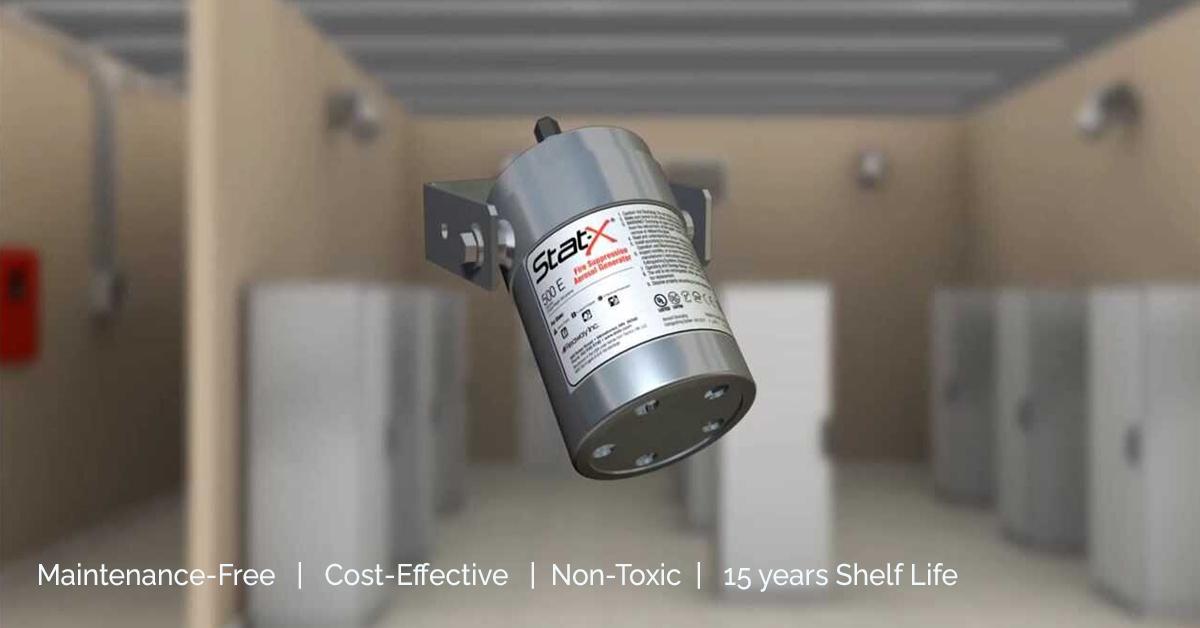
With the advancement of technology, it is necessary to revolutionize the sector by introducing fire safety equipment that is simple to maintain, long-lasting, and automated. Stat-X Aerosol Technology is a revolutionary technology developed by Fireaway Inc. after extensive research for early detection and suppression of fire accidents, thereby saving both personnel and company assets.

VNT has partnered with Fireaway Inc. as a technical and business partner, making VNT an exclusive master distributor for Stat-X Condensed Aerosol Fire Suppression System for the Indian market.

Current Situation of Fire Safety Practices in India:

Various businesses have begun to recognize the dangers of failing to implement an effective fire safety plan. According to the ADSI-2019 report, compared to 2018, the number of fire accidents reported decreased by 16 per cent. The data from 2015 to 2019 shows a gradual decrease in the number of fire accidents reported each year.

To reduce this statistic even further, every organization must have a fire safety plan in place. For enterprises and businesses, incorporating innovative fire safety solutions based on cutting-edge technology has a long-term benefit.

For more information on how our solutions can help you safeguard your workplace or residential complexes, subscribe to our newsletter.