In the first six months of 2021, Delhi Fire Service responded to over 13,700 calls, out of which 8,700 were fire incidents. This alarming statistic reflects a lack of awareness regarding fire suppression systems and an effective fire safety plan. Every successful fire protection plan includes an efficient fire suppression system. This article enlists what a fire suppression system is, its working and the various kinds of fire suppression systems available in the market.  

Fire Suppression System: Investment that Guarantees Enhanced Safety 

Fire Safety Planning prevents fire by controlling fire hazards in the building, ensures operation of fire protection systems through maintenance procedures, and provides a systematic method of safe evacuation from the building in the event of a fire. A fire suppression system is a crucial part of any fire safety plan. 

Every business and residential association must ensure the safety of human and physical assets, especially in fire hazards. An ideal fire suppression system should curb fire accidents at their site of origin without any human interference. Today’s advanced fire suppression systems can detect flames, sound an evacuation alarm and douse fire simultaneously. 

Moving on to the installation side, the fire protection device installed in an industry that manufactures electrical equipment is different from the fire protection device installed at a movie theatre. The point is, based on the area of application, the fire protection devices vary. To comprehend their mechanism and determine which fire suppression system is best for you, it is beneficial to understand more about them.

What goes in a Fire Suppression System?

Have you seen a fire suppression system installed at a facility? There is a lot of chemistry involved in the functioning of a fire suppression system. 

Fire is a result of a combustion reaction between the reactants – oxygen and fuel. The term ‘fuel’ here refers to a burning substance, which is a hydrocarbon in general. What a fire suppressing agent does is, it simply cuts the supply of oxygen from the burning fuel.

The suppressing agents per various classes of fire and how one can plan the installation of fire suppression devices at any facility differ according to the needs and usage. There are different types of suppressing agents for different classes of fire as per the “National Fire Protection Association” (NFPA) standards.

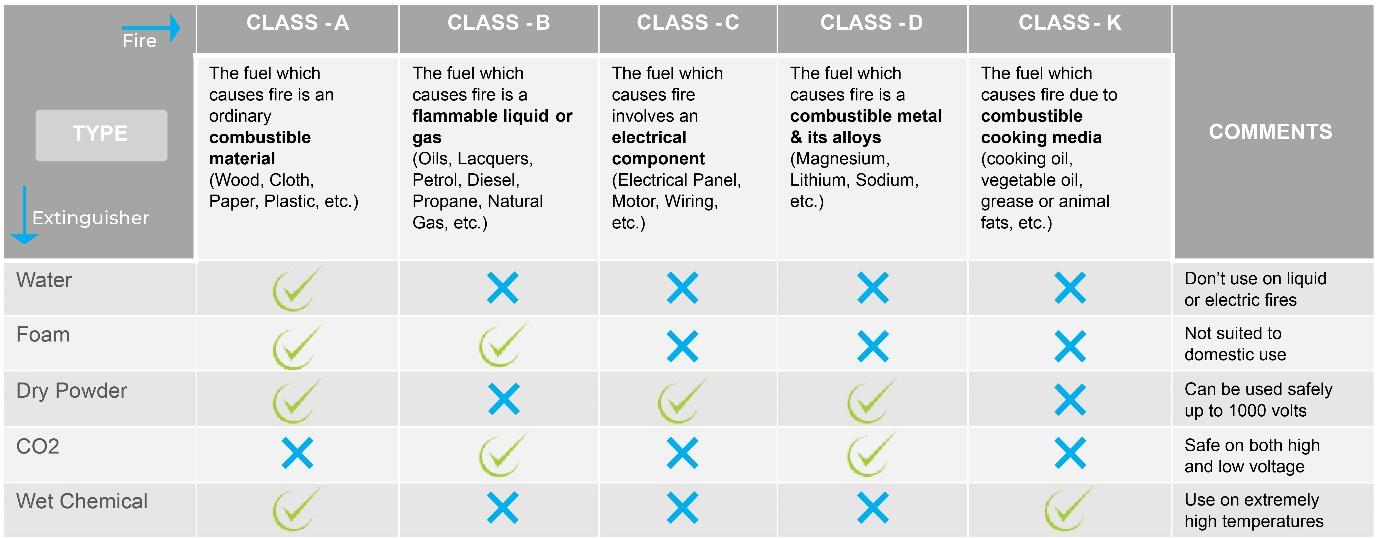
Classification of Fire as per NFPA standards:
A picture containing diagram

Description automatically generated

The usage of suppressing agents is highly dependent on the Class of Fire and improper use of suppressing agents may lead to severe consequences. 

Let us take a look at the types of Fire Suppressing Agents:

  • The Generic Fire Suppression Agents – Water and Foam:

Water and Foam are the most common fire extinguishers which are readily available to us. Although water can extinguish the fire by hindering the combustion reaction between fuel and oxygen, it is highly recommended for Class A fires. Using water against class B leads to the spreading of the flammable liquid and their usage in class C could create an electric shock due to its ability to conduct electricity.

Foam Extinguishers can be used for both Class A & Class B fires. The strong cohesive qualities of foam make it capable of clinging to the surfaces, cools the hot surfaces by its water retention ability, seals the surface of the liquid, forms an air excluding blanket which prevents the flammable vapour from interacting with oxygen present in the air.

  • Aerosol-Based Fire Suppression:

Condensed aerosol is another new class of extinguishing medium which consists of ultra-fine solid particles – generally less than 10 microns in size. This extinguishing agent is generated by a self-contained exothermic reaction and is proven to be ten times more effective than gaseous extinguishers.

The stable molecules are responsible for fire suppression. These stable molecules are formed as a result of the reaction between the aerosol and the flames. Moreover, they remain suspended in the air for a prolonged duration of up to 1 hour – thus making it one of the most effective fire extinguishing agents.

For example, Aerosols that contain potassium which possesses highly extinguishing characteristics, forms Potassium Hydroxide, Potassium Hydride, Water Vapor, and Potassium Oxide upon reacting with hot flames.

  • Carbon Dioxide Fire Extinguishers:

Gases like Carbon Dioxide, Argon, Nitrogen, and other inert gases are particularly useful in flame suppression when water, foam, and powder suppressing agents are ineffective against the flames. 

Unlike a foam extinguisher that leaves residue after the combat with flames, CO2 extinguishers do not leave any residue. Suitable for both Class B and C fire, Carbon Dioxide Fire Extinguishers suppress the fire with an intense cold discharge. Thus, they take away oxygen from the flame and remove the heat. The gaseous fire suppression system is both cost-effective and easy for clean-up.

  • Dry Powder and Dry Chemical-based Fire Suppressing Agents:

Powder-based suppressing agents are effective only against class D fires or combustible metal fires. Made of granular particles, this fire suppressing agent includes Copper, Sodium Chloride and Graphite as constituents in the mixture.

On the other hand, a Dry Chemical-based suppressing agent is a mixture of additives and tiny particles of metal-bicarbonates (Sodium Bicarbonate/Potassium Bicarbonate) or Ammonium Phosphate. However, the usage of metal bicarbonate suppressing agent phosphate is quite suitable for extinguishing the flames of Class B & C. Similarly, the use of Ammonium Phosphate is applicable against the fire of classes A, B, and C. 

  • Wet Chemical Extinguishers:

This suppressing agent is highly effective against the class K and class A fires. The Wet Chemical Extinguisher is a mixture of water and additives, which chemically react with fats in cooking oil. The constituents of wet chemicals react with the flames to create a thick, soapy barrier between oxygen and the supporting fuel. The quick flame knock-down ability as that of Dry Powder and Foam cuts off the oxygen supply and extinguishes the fire with a heat-resistant blanket.

Fire Safety Preparedness: Where Do We Stand Now?

It is prudent to use the most advanced fire detection methods and suppression in this day and age. Traditional hazard fire protection systems necessitate costly installation, frequent maintenance, piping space, weight-bearing fixtures, and numerous other modifications. Fire suppression systems should be cost-effective, easy to maintain, and quick to respond.

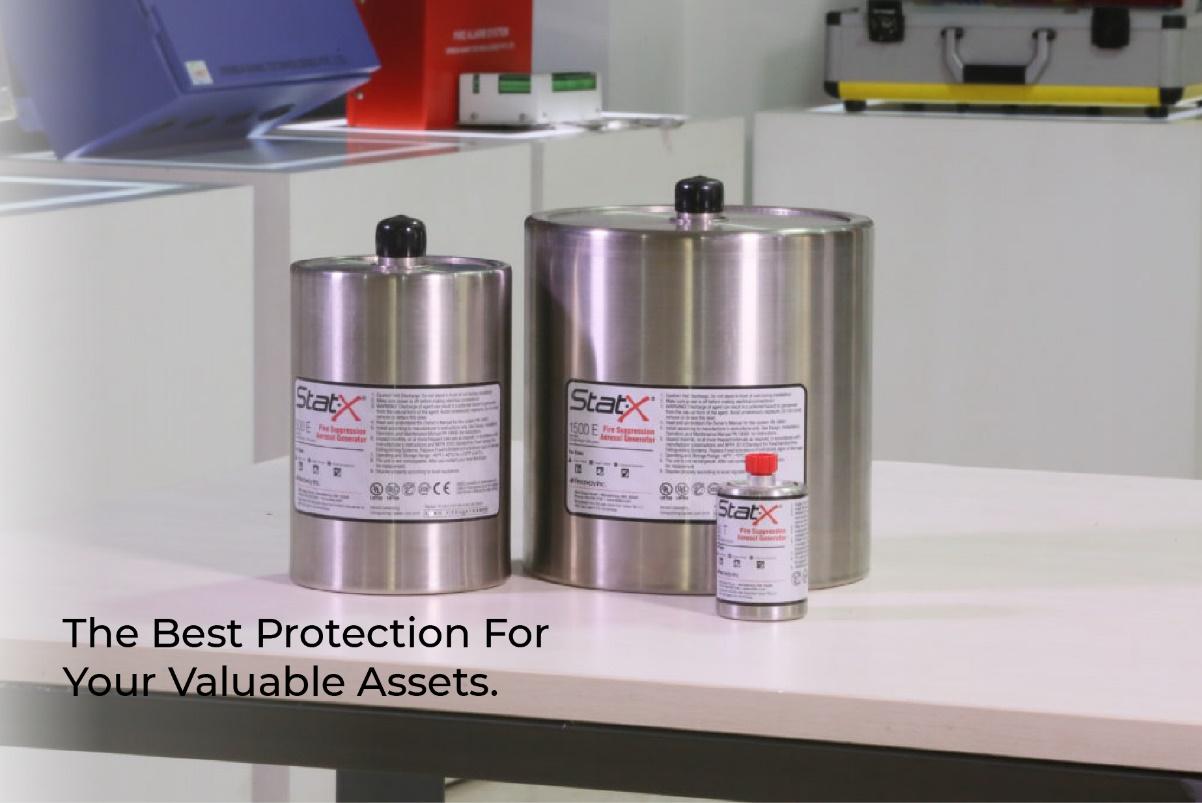
Classification of fire suppressing agents per various classes of fire and how one can plan the installation of protection devices at any facility is quite essential. But it is recommended that high-rise residential complexes, commercial buildings, and enterprises install a fire suppression system that works on different classes of fire – providing safety in all scenarios. VNT’s Stat-X Aerosol technology is an effective fire suppression solution designed to address traditional solutions’ shortcomings.
A picture containing text, indoor, wall, shelf

Description automatically generated

VNT’s Approach to Fire Safety Solutions

It is critical to invest in appropriate fire safety systems to avoid unnecessary costs and risks to a company’s assets. Successful fire suppression is a complex task that necessitates a diverse set of products, systems, and expertise. VNT has provided industry-leading fire safety solutions to large-scale projects and established clientele in collaboration with Fireaway Inc. as a technical and business partner (with the latter leading the international market with its development of the Stat-X Condensed Aerosol Fire Suppression System). All of our fire safety solutions are in accordance with international standards such as NFPA 2010 and UL 2775, and they play a vital role in protecting facilities and individuals from fire hazards.If you would like to see for yourself how VNT India can help you simplify support and put customers first, write to us.
Power has become the most crucial element required for the functioning of an economy since the Industrial Revolution. Different industry sectors are heavily dependent on energy, from domestic to agricultural and to service and governmental operations. The importance of power continuity for a business puts strain on the reliability of power equipment. Hence, the power quality of the systems is of utmost importance to minimize any source of power disturbances. 

As per the IBF reports, India ranks second globally in power consumption. With a rapid surge in energy demand, the power facilities must undergo proper maintenance and regular audits to promote efficiency. Additionally, early detection of faults can help in preventing outages and improve the productivity of plant equipment and assets. This article will address the causes of power quality disruption and how businesses can prevent it. 

Power Quality Monitoring to Boost Equipment Reliability

Electric parameters are prone to fluctuations due to unbalanced load, the occurrence of faults, and other external factors. Power quality issues affect the entire electrical system, including the equipment, plants & installations, and electricity distributors. 

The continuity, efficiency, and safety of organizations’ equipment depend on maintenance. While we cannot avoid the deterioration of the power quality, analysis and detection can surely aid in maintaining the equipment’s performance. 

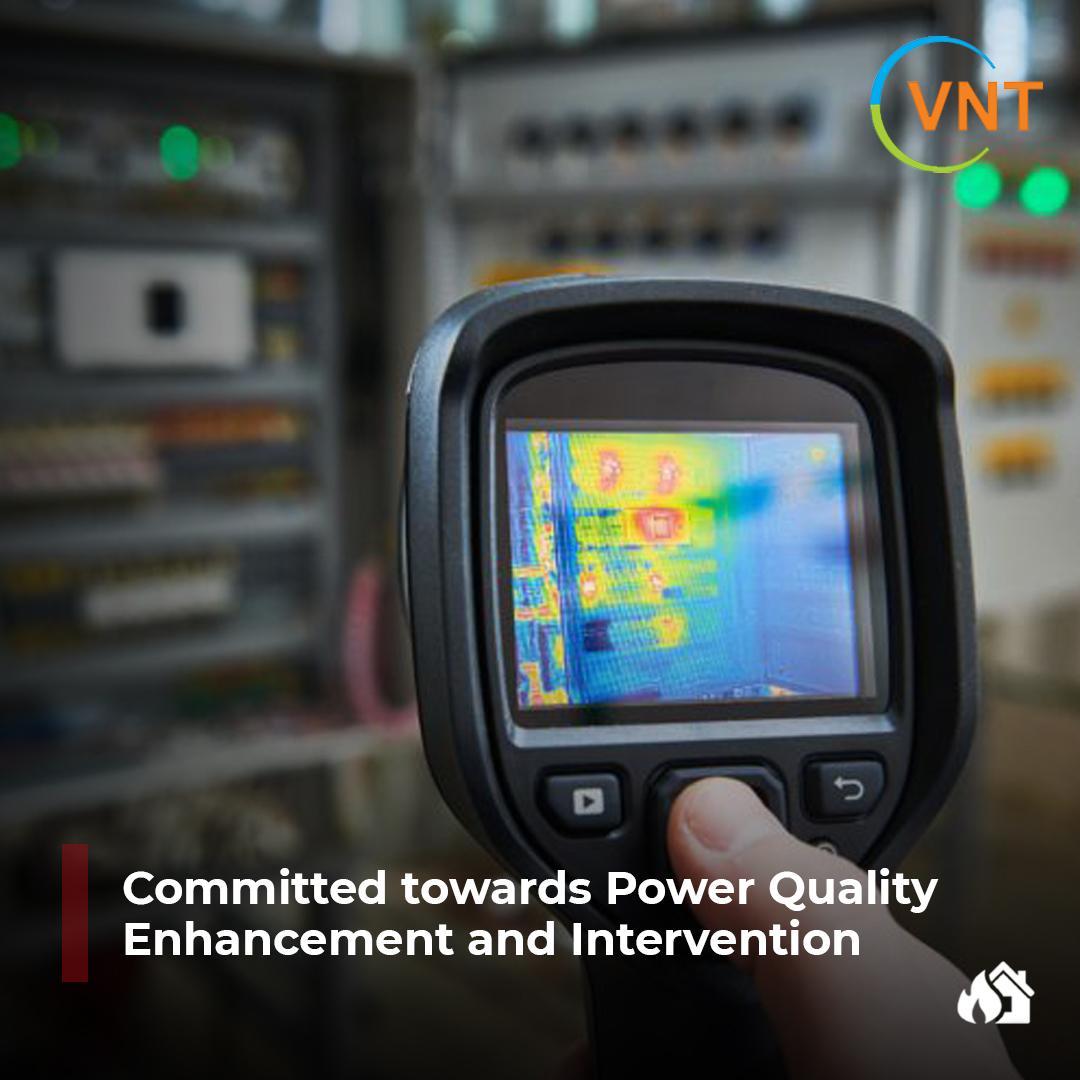
Power quality monitoring significantly improves equipment reliability and infrastructure support through better management of electricity distribution. Furthermore, thermographic testing of the equipment utilizes infrared energy to inspect various electrical components for defects, regardless of disturbances such as voltage sags/drops, harmonic distortions, imbalances, complete breaks, power quality analysis diagnoses these inadequacies. 

However, one must ensure to take thermography testing along with power quality analysis. Infrared inspection, commonly called thermographic testing, is a non-destructive predictive maintenance method. Besides power quality, it detects connection defects, overloads, deteriorated insulation, and other potential problems in electrical components.

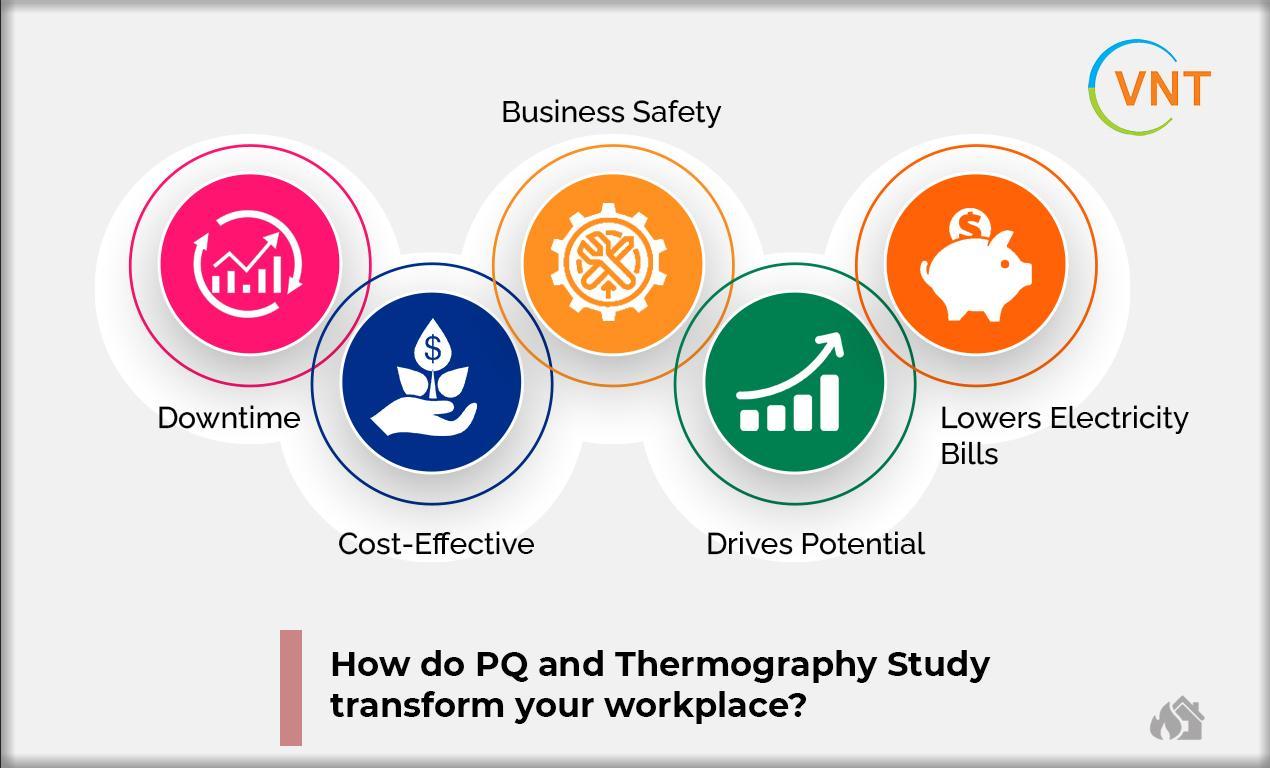
Some of the major purposes of power quality analysis and thermography testing are:

  1. Downtime Reduction: Considering equipment failure and outages, businesses need to check the power source. Therefore, a power quality audit helps detect potential problems, implement corrective actions, and avoid facility downtime. 
  1. Cost-Effective: Poor voltage, power imbalances, and fluctuations often lead to unwanted disruptions for electronically controlled equipment. This, in turn, deranges the valuable assets and precision of an organization and creates a real-time loss.
  1. Business Safety: In a condition of improper power supply to machines and equipment, they run the risk of overheating. Besides, when machines overheat, their breakdown can cause significant damage to property and people. Thermography testing is an effective solution to measure surface temperatures and reduce the possibility of overheating. 
  1. Drives Potential: Prolonged interruption of power reduces productivity and hence, the output, which places a heavier drain on the power source. If we do not check it timely, it causes energy wastage along with the halt. Predictive maintenance services such as a power quality audit and thermography allow the address of such problems.
  1. Lowers Electricity Bills: Be it a sag, dip, or power outage, these fail to meet the efficient power factor that directly impacts billing. Essentially, thermography testing spots such areas of loose or corroded connections that cause increased resistance in the circuit. Consequently, power quality analysis provides practical measures to mitigate the risks.

The National Fire Protection Association (NFPA) approximates the fire hazards in facilities due to electrical failures to be around ten percent. Several power quality issues include data errors, overheating, excess power usage, increased maintenance cost, etc. An audit proves to be proactive at these stages and provides businesses with effective solutions. 

Radical Approach for Industrial Safety

When an electrical system fails to perform as expected, the first step is to identify the cause and implement corrective actions. Power quality is primarily monitored to ensure the stability of electrical power. Furthermore, it investigates an electric device’s ability to function appropriately in the presence of a distributed amount of energy. Poor power quality can cause unstable equipment operation, complete failure, shorter lifespan, supply interruption, and plant downtime.

Therefore, thermography testing and power quality audit provide temporary monitoring of electrical appliances in a detailed procedure that includes:

  1. Analyzing power equipment: The first step to framing a feasible solution for systems is to determine the area of unfamiliarity. We can derive conclusions from the equipment whether the faults are ongoing or recurring, and this analysis helps obtain baseline data for today and future purposes.
  1. Data Interpretation: Before taking initial quality measurements, it is necessary to inspect the environment of power equipment. The first step is to measure and interpret the magnitude of voltage fluctuations, harmonic disruptions, and duration of changes. It culminates the severity and locates distribution systems that one must monitor for imbalance.
  1. Power Quality Verification: While the auditors analyze the data, thermographic testing enables the detection of corroded connections deteriorated insulations, which are then replaced. Hence, modifying the power system or installing equipment within the business premises.
  1. Securing through Dry-run: Given the corrective measures, the auditor conducts a dry run and monitors voltage in the meter. Furthermore, businesses must ensure all wiring is secure and not exposed to moving parts or high heat sources. Once everything is safe and secured, the equipment is equipped in a cabinet. 

A critical step in solving power quality issues is learning how to measure electrical parameters associated with the proper operation of equipment.

The utility model of electricity, i.e., Power Quality Analyzer, is a device that gathers and analyzes electricity measurement data into useful information. The most commonly used devices for deriving data and troubleshooting are Analyzers. The data derived from existing electrical infrastructure provides clear feedback on the system and its areas for improvement. This information helps in identifying upgrades and changes within a facility. 

We observe the data through voltage recorders and in-plant power monitors to record periodic waveforms and voltage spikes or dips. Businesses can further share the following information with other utility providers to analyze regional grid issues and with operations personnel responsible for maintaining power quality.

Thermography Test & Root Cause Analysis with VNT

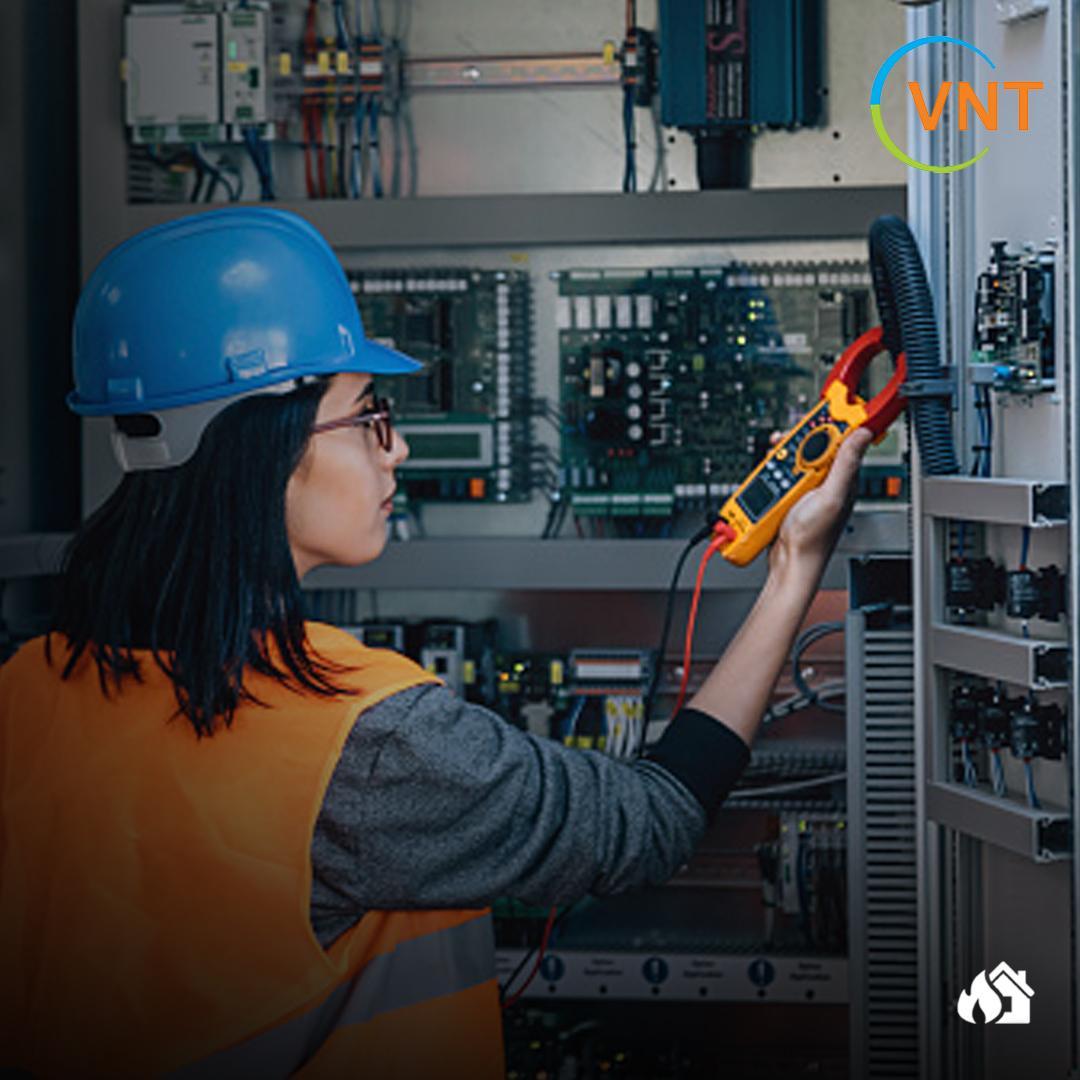
Thermographic testing and power quality analysis are complex processes involving exposure to live electrical components. Therefore, it is crucial to seek trained consultants who have undergone specialized training in conducting thermography and power quality.

 VNT provides technical solutions primarily in power inspection and energy management. We offer varying levels of power quality to meet the needs of different customers. Electrical systems are prone to unexpected failure; however, a noticeable increase in heat in various parts precedes equipment failure. We identify such precedents and ensure the safety of your business and its equipment through thermography testing.

We specialize in evaluating, auditing, and addressing a wide range of power quality issues to increase plant, motor, and equipment efficiencies. Our trained professionals handle the whole spectrum of power quality, from technical audits to on-site industrial energy audits. We thoroughly analyze the power system to comply with the standard regulations IEEE Std.1159 and IEC 61000 – 4 – 30. We ensure the sensitive equipment’s reliability, safety, and simplicity of operations. 

With VNT’s audit and thermography test, you can seek electrical maintenance services and the improved lifespan of your existing equipment. Moreover, we provide businesses with a sound system that improves power-generating equipment’s performance, efficiency, and longevity. Our services limit the disturbances to the power distribution system and thereby ensure safety, risk reduction, maximize productivity, and reduce delay costs. 
If you want to optimize the service life of your business equipment and troubleshoot power quality issues, contact us

Today, Switch-Mode Power Supply Systems find wide usage in nearly all electronic devices – from home computers to state-of-the-art industrial machinery and equipment. SMPS technology was first introduced in the late 1990s, and it quickly became the most successful technique for supplying DC power to electronic equipment. Known primarily for its small size and high efficiency, SMPS contains all the necessary properties that make it a must-have for all industrial sectors, from Machine Tool industries, Process & Control Monitoring to Security Systems. Due to its competence, SMPS is used to provide an efficient and effective power source.

This article covers various aspects of SMPS, including its working, usage and functionality.

What is a Switch-Mode Power Supply?

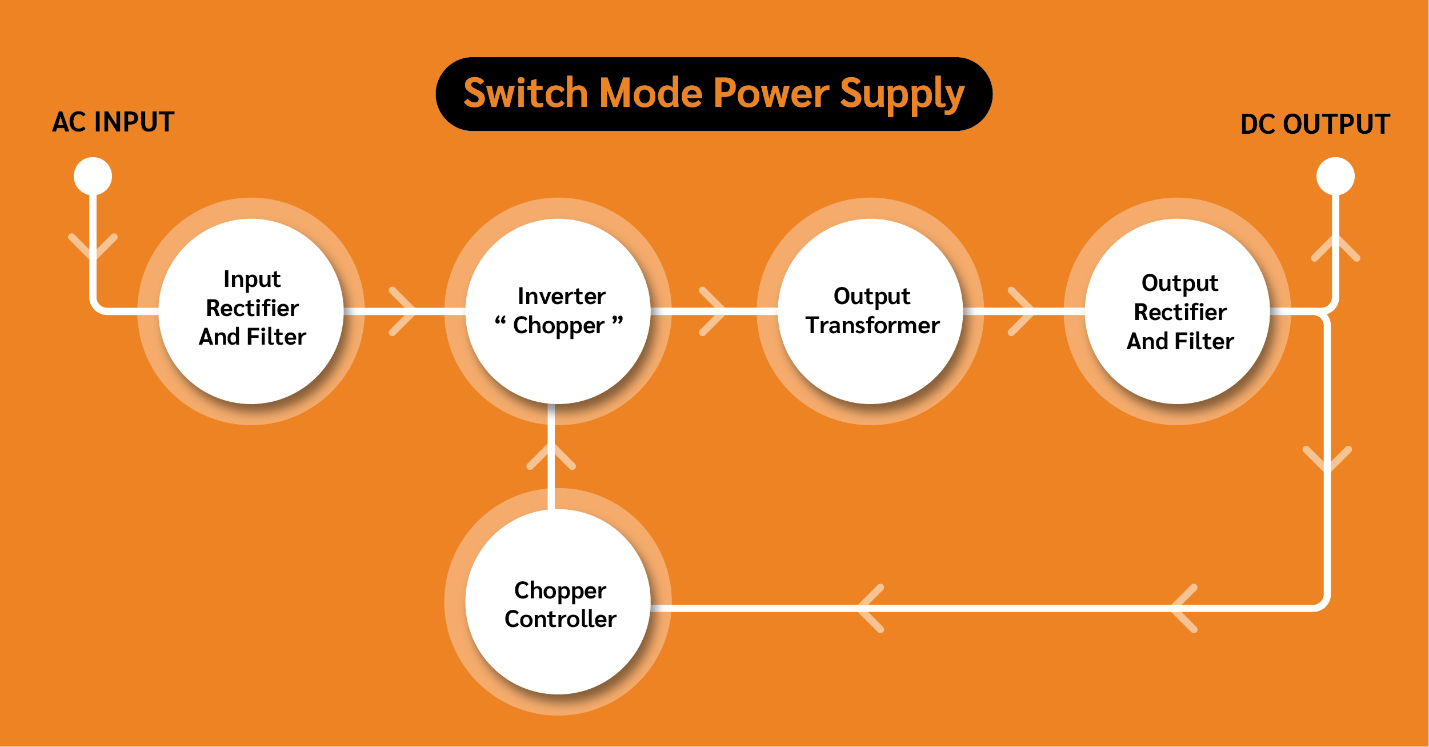
A Switch Mode Power Supply is an electronic power supply that utilizes a switching regulator to convert electrical power efficiently and safely. Like conventional Power Supplies, SMPS transfers power from an AC or DC source to a DC load, while converting voltage and current characteristics. 

“Power Supply” refers to a device that generates source power and is connected to the mains or another external supply. In simple words, it’s a complete power supply. Switch Mode Power Supply does not use linear transforms; instead, it switches power at a high frequency and then steps down the voltage.

The basic principle behind a Switch-Mode Power Supply is that it utilizes a switching regulator to regulate the voltage. It employs a series switching element to turn on and off the current supply to a smoothing capacitor. The voltage on the capacitor determines how long the series element is turned on. If it is greater than the required value, the series switching element is turned off; if it is less than the required value, it is turned on. The voltage on the smoothing or reservoir capacitor is thus kept at the required level.

Need For SMPS in Advanced Industries

In an industry, multiple types of machinery are at work at the same time. Unlike the past, wherein machines and equipment were operated manually, the operations in today’s automated industries are mechanized and frequently grouped together. The functions performed by these machines can be turned on and off using a computer. Some of these machines may require different voltages to operate effectively. Machinery and Equipment that operate in varying voltages might be needed to be integrated to work simultaneously. A DC power supply source is required in diverse voltages to deploy this system proficiently. This results in large-scale use of Switch-Mode Power Supply in modern industries.

A DC power source powers almost all electronic and electrical devices in the control panel; the utility supply is AC. SMPS is used for converting AC To DC. Traditionally, Linear Mode Power Supplies have been used to convert AC mains to DC power. They used linear transformers to reduce the voltage. This generated heat and resulted in power loss. The total magnitude of this power loss results in a significant decrease in efficiency. Another disadvantage of Linear Mode Power Supplies is their bulkiness. Switch-Mode Power Supply is light-weight and portable, thus more convenient to use in industries where efficiency, space-saving and cost-effectiveness have to be achieved. Switch-Mode Power Supplies have replaced the conventional Linear Mode Power supply and created a demand for themselves in the market.

Switch-Mode Power Supplies: One Solution, Multiple Benefits

Since the very beginning, our quality products and innovative solutions have been standing strong while standing out. With a number of innovative engineered customized products, we always provide the perfect solution to represent your business. Our production team is highly competent and believes in innovation, research and constant improvement of our services. In this super-tech age, we completely understand the need for technical advancement and hence, we have indulged in early innovations and engineering skills. And due to this approach, we have carved a position for ourselves across India.

Our Switch Mode Power Supplies are widely utilized due to their small size, light-weight, cost, efficacy, and overall performance advantages.

  1. High Efficiency: Due to the “switching action”, the series regulator element is either on or off. Electromagnetic interference is prevented by the electromagnetic filters used in SMPS. Because of its wide output range, SMPS is designed so that the input voltage does not affect the transformer’s performance. Thus, higher levels of efficiency are achieved as very little energy is dissipated as heat when acting as a switch.
  1. Compact: It uses advanced semiconductors-thus an SMPS can be made smaller. They make an excellent choice for small control panels. Their high efficiency and low heat dissipation also play a key factor in their small size.
  1. Cost-Effective: A SMPS generates less heat compared to linear supplies due to its higher efficiency and switching design- they generate negligible standby power loss.

  2. Flexibility: Switch-mode Power Supply technology provides high-efficiency voltage conversions in voltage step-up (or Boost) or step-down (Buck) applications.

  3. Durability: Industrial power supplies should be able to endure harsh environments and withstand high temperatures. SMPS functions aptly at both high and low temperatures.

  4. Safety: Guaranteed protection against overload, short-circuit and overheating.

Switch-Mode Power Supply: Factors Affecting Performance 

Throughout the article, we inferred the need of replacing Linear Regulators with Switching Mode Power Regulators to maintain high efficiency. SMPS outperforms the traditional Linear Power Supply in efficiency, but care must be taken in certain aspects.

The transient spikes caused by the switching mode is one of the most severe issues. If the spikes aren’t properly filtered, they can spread to all other circuits powered by the same SMPS. They can also cause electromagnetic or radio frequency interference, affecting other nearby electronic equipment.

A SMPS with a poor design can produce a lot of noise and spikes in the output. Ensuring that a SMPS meets its specifications can be difficult; an expert design. Thus, selecting a SMPS from a reputable provider is critical, as simple designs may have a low power factor. The Switch-Mode Power Supply system developed by VNT is the finest choice for any industry. For various telecommunications applications, we render reliable and efficient solutions. Our acquired expertise and highly innovative systems have helped us achieve a leading position in the Telecom Power Switching market. 


VNT – Rendering Industry-Leading Solutions 

We are experts in the field of Energy Conservation, Telecommunications, Power Management, and Safety- rendering essential solutions in a variety of industries. Our highly engineered solutions and customer-centric approach have helped us establish a solid foothold in the Indian market. Contact us to learn more about our services and how they can help you transform your business.