The pace of technological progress in India puts a significant responsibility on individuals and businesses to utilize the resources efficiently. It is equally significant to opt for security systems to avoid any adversity. Despite these advancements, it is necessary to address the damage that natural disasters result in. Lightning strikes present a real threat to residential and commercial buildings, causing equipment damage, high voltage spikes, etc. Without adequate lightning protection, a strike can easily overload a building’s electrical system and disrupt major components. However, with particular attention and design, organizations can limit the effect of lightning on a structure. This article will address the purpose of lightning protection systems and how SMPS protects your business from lightning.

Lightning Protection Systems: Protective Path to Ground

Lightning strikes are highly unpredictable, but their devastating effects are not. This forces us to take precautions against it. 

A lightning protection system is a device that we install on a structure, building, or equipment that prevents any damage against lightning strikes. It is designed to protect a structure by intercepting such strikes and dissipating the electrical charge into the surrounding ground, thus diverting the current around the building. This reduces the chance of the lightning current rebounding through nearby surfaces and into nearby people. This, in turn, prevents damage to nearby structures through fire or structural collapse.

Tall buildings are highly susceptible to lightning strikes and damage. In severe conditions, overvoltage induced on conductive materials and short circuits can cause a fire. Such fluctuations cause widespread damage to electrical systems and sensitive equipment. This induces ignition of flammable materials that pose an extreme threat to people, loss of crucial data, and business productivity.

Essentially, the purpose of a Lightning protection system is to-

  1. Protect equipment and systems from the damaging effects of lightning.
  1. Protect building or structure and ensure the safety of the people inside.
  1. Mitigate fire hazards or any other severity which lightning strikes pose to structures.
Lightning protection systems include a network of air terminals, bonding conductors, and ground electrodes. These components safely redirect the electrical charge from “cloud to ground” and mitigate the risk of potentially fatal lightning strikes. However, it can be challenging to impede the flow of electric current directly into the ground due to external factors. To disrupt communications through induced electrical surges, one must use lightning arresters. Its link to electric power systems and telecommunication systems curbs the electric current, preventing overvoltage. 

Purpose of a Lightning Protection System

The main benefit of lightning protection is to neutralize the electric current. The lightning system discharges it into the lowest point of resistance in the building, which is passed into the ground. 

Tall and isolated structures are common to get struck by lightning. Therefore, businesses must ensure safety for facilities and places where lightning strikes are prevalent. Moreover, an efficient protection system is crucial for areas having a large number of people. 
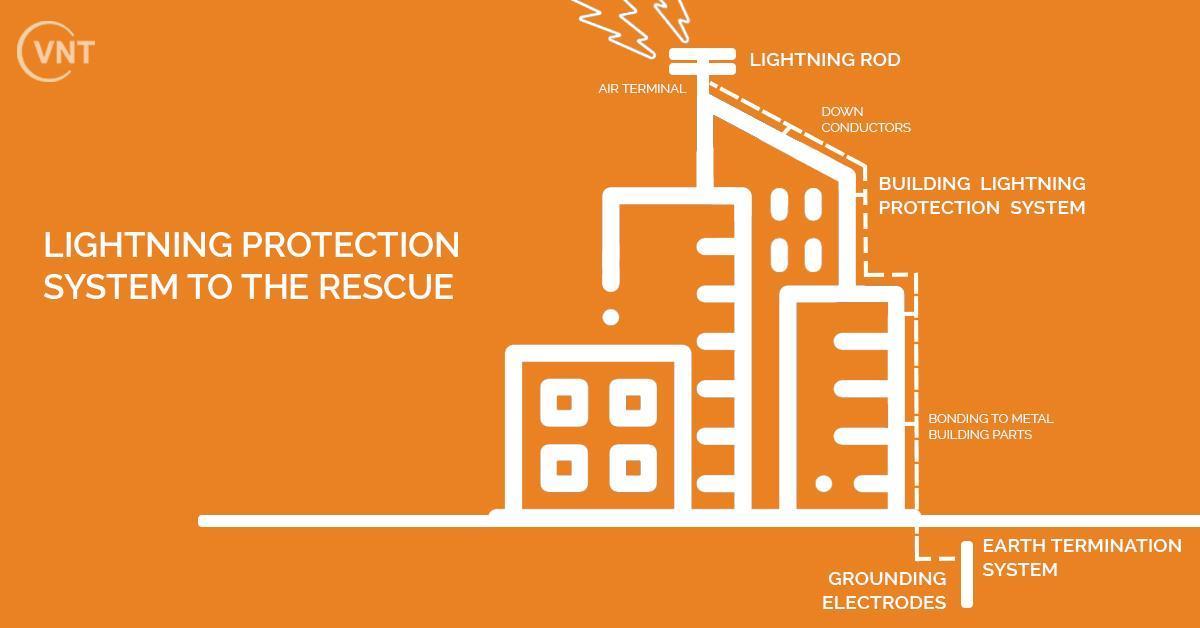
These protection systems conduct and dissipate any possible lightning current while protecting the system itself. The purpose of lightning protection systems include:

  1. Safety Hazard: Lightning strikes that enter the building expose a significant safety hazard to the building’s occupants. A lightning protection system thus maintains protective devices to minimize the effects of lightning-induced surges on buildings and their occupants.
  1. Disrupting Business Continuity: Sudden and unexpected power disruptions due to lightning affects vital utilities and disrupt business continuity and efficiency. A lightning conductor passes the current into the ground that allows the smooth functioning of your business.
  1. Protection of Electrical Equipment: While we protect our building from lightning strikes, it is equally important to guard the essential equipment within. The only way to fully protect your building and electronic equipment is by installing a surge protection device in a lightning protection system.
  1. Heritage Protection: Buildings and structures of historic importance stand isolated. As these areas are widely prone to natural disasters, lightning protection becomes necessary to secure these archaeological sites. Therefore, we need to preserve them whole and intact.
  1. Financial & Data loss: With current discharge involved, damage caused by lightning is often disastrous to property and people, even in a concise duration. Heavy devices prone to lightning destroy the main electric line, damaging systems and leading to loss of valuable data.

A lightning protection system provides businesses with safety and protection as per their requirements. But how do we measure the efficacy of a protection system? The potential for failures with lightning protection increases with the system age; therefore, it is critical to seek licensed and certified professionals. A certified installer ensures safe installment and maintenance of lightning protection systems. It helps intercept, conduct, and disperse a lightning strike safely to earth. This mitigates the risk of a system failure while meeting government standards and certification. 

Safeguard Your Indoors- With VNT


There have been an odd number of incidents involving lightning striking tall buildings and other structures in the past years. While we cannot avoid the risk entirely, we can surely mitigate the risks associated with a lightning strike through risk assessments. According to Indian Standard IS/IEC 62305 for lightning protection, it is mandated to protect a structure against lightning. It is crucial to solicit services from certified professionals to cover all risks, including equipment damage, harm to people, etc.

With VNT at your service, we safeguard your business against the most hazardous weather calamity, i.e., lightning. Our lightning protection systems defend against the threat of strikes to the structure of buildings and their associated services.

We take government standards and business requirements as our priority. Our team of professionals undertakes a complete site survey. With our expertise, we recommend the most suitable technological solutions available with regular testing and maintenance after service. 

To fortify your business against lightning strikes for any industrial site or commercial infrastructure, contact us.

The telecommunication industry enables us to connect and conduct business globally. This sector has become the foundation for businesses, governments, communities, and families to connect and share information seamlessly in today’s digital ecosystem. The Indian telecom industry has one of the most competitive markets in the world. India currently has over 6.5 lakh telecommunication towers and around 22 lakh telecom sites


Telecommunication services have contributed tremendously to our country’s socio-economic development. Telecom towers are an essential component of the telecom network infrastructure. They are the most expensive to construct and utilize very costly equipment and materials. With the advancement of wireless communication technology, telecom sites have begun to house transmitting devices like cellular phones, personal communication services, and television and radio broadcast antennas.

Setting up any telecom site necessitates months of meticulous planning, substantial financial investment, expensive machinery, and a large workforce of varying specialities and functionalities. More emphasis is being given to dispensing unparalleled services to their existing customers due to the intense competition in the Indian telecom industry. To yield seamless services, the telecom sites must operate without any problems or accidents. 

This article discusses the major safety issues at a telecom site, how to prepare for them, and what solutions can help safeguard valuable assets at a telecom site. 

What Major Safety Issues Can Be Expected at A Telecom Site?

A telecom site, like any other industry, is vulnerable to a wide range of concerns. Some security issues cannot be identified in advance, whereas others can be anticipated and resolved with a long-term solution. When it comes to telecom site management, only avertable and predictable issues can be addressed through safety planning.

Physical Site Security: 

Telecom towers are frequently erected in remote and isolated areas due to coverage reasons. Because of their difficult and inaccessible locations, such establishments are difficult to guard physically. This makes the telecom site more vulnerable to break-ins and thefts. 

Unauthorized physical intruders pose a severe security threat, whatever may be the motive: trespassing, theft, or vandalism. Since critical telecom site infrastructure requires constant physical security monitoring but are unmanned due to their location, telecom sites and towers are more vulnerable to intrusion. One of the serious consequences of such a security breach is the possibility of disclosure of confidential information and legal implications from lawsuits by an investor. 

Theft of expensive machinery, battery fuel, high-performance batteries, etc., leads to monetary loss and a halt in the functioning of the telecom site. Theft can result in significant financial loss for the company, both in terms of replacing equipment or machinery and downtime required before the site can perfectly function again. Additionally, copper theft is a major issue.

The physical security risks in a telecom site are caused by insufficient and improper access control. Physical security is paramount in telecom site management, where response needs to be proactive rather than reactive. A Remote Monitoring Unit (RTU) on entry and exit points, coupled with a Remote Monitoring Master System, aids in enhancing security.

Environmental and Thermal Challenges: 

Location selection and planning for a telecom site is a strenuous task. The area’s environmental and climatic conditions play a significant role in determining if the selected site is feasible for setting up a telecom tower. A meticulous Site Survey is essential before selecting a location, including assessing natural calamities and damaging nearby activities, like toxic chemical spills, etc.

The most common environmental level that needs to be monitored is temperature. Although industrial machinery and equipment are made resilient; however extreme conditions may pose threats in the future. If the temperature gets too high, there’s a possibility of thermal shutdowns and if the temperature gets too low, there are chances of soft failures and equipment breakdown. If not monitored and maintained, these issues are recurring and can become costly very quickly.

Humidity Issues: 

To ensure uptime and system reliability, a telecom site’s humidity levels must be monitored. When humidity levels get too high, there are chances of condensation buildup. Excessive uncontrolled humidity leads to puddling, which can cause increased chances of hardware corrosion and installation of gas early system and component failure. 

A more significant cause of worry is when the humidity levels dip very low. Equipment may become susceptible to electrostatic buildup and discharge, damaging sensitive components. VNT offers specialized Earthing Study to combat electrical discharge security issues caused by humidity.

Toxic Gas Accumulation and Fire Hazards:

It is critical to protect your telecom site from dangerous gas buildup to save property and personnel. A telecom site is vulnerable to highly flammable hydrogen gas buildup caused by overcharging batteries, propane and methane leaks, and other potentially toxic air contaminants. Because of the confined spaces in telecom sites, fire and gas explosion risk increases as these gases accumulate. The installation of a gas detection and fire detection system ensures a safe working environment while maintaining productivity and meeting regulatory requirements. 

Our comprehensive range of automated fire safety solutions reduces fire-related incidents and events in critical areas. Our Stat-X Aerosol Fire Suppression Systems offer an overall approach to detecting and effectively controlling fire hazards at telecom installations.

Remote Monitoring System – A Comprehensive Solution for a Majority of Telecom Safety Issues

Typical telecom operation assets are spread across many kilometers, covering urban and remote areas. It is not possible to monitor each site separately. Even so, the information available is prone to errors and inaccuracies. A Remote Monitoring System is installed in telecom sites and towers that continuously monitor equipment across multiple locations to address this issue. A competent Remote Monitoring System (RMS) is the permanent solution to the aforementioned telecom site safety issues.

Telecom site automation is a low-cost solution that improves telecom companies’ efficiency in their sites. It addresses safety concerns and offers solutions to improve power, security, and environmental management at remote locations. 

  • Coupled with an RTU on entrances and exits, an RMS can efficiently and promptly detect unauthorized personnel entry or unusual activity at a telecom site.
  • RMS can also be set up with a temperature threshold. 
  • RMS can send out alerts when humidity levels experience a disturbance or exceed the safety range.

Thus, when such unwanted instances occur, alerts can be immediately sent to concerned systems and authorities. Once configured, Remote Monitoring of the Telecom Site becomes effortless.

VNT – Promising Results Guaranteed with our Telecom Solutions

VNT provides telecom solutions for the telecommunication sector to manage various safety issues at remote telecom sites from their network operations centre. We offer flexible and adaptable automated Remote Monitoring Solutions. Our Remote Monitoring Systems would allow operators and tower companies to monitor site security and control site access actively.

To know how our industry-leading solutions can assist you in your business, contact us.

Safety is paramount when it comes to laying the groundwork for an establishment’s electrical network. Earthing, also known as grounding, is a fundamental and necessary part of ensuring safety in an electrical system. It helps in protecting people and equipment as it safeguards against dangerous potential differences. This article discusses an earthing system and its types while elucidating their importance in mitigating risks to make electrical networks safe.


Earthing- A Look Behind Its Science:

The primary objective of earthing is to dissipate any excess electrical energy directly into the terrain. It detects the stray voltages and prevents flow of current through a low resistance wire. Fault currents, atmospheric discharges, human error, etc. are some of the reasons for leakage current in an electrical system. It provides a  path to such unwanted charge by connecting the non-current carrying part of the equipment to the ground.

Earth’s electric potential is zero, so the electric potential of any charge connected to the ground neutralizes. Thus, grounding provides the current with a shorter direct route into the ground. 

Generation of a potential difference in certain points of the infrastructure is common. Therefore, grounding systems guarantees the safety of the people and the installation even if significant potential differences appear.

Importance of Earthing Systems:

Without a doubt, electrical systems are extremely hazardous. However, proper grounding of all metallic parts of the electrical system and equipment helps in preventing the adverse effects, even if there is excessive voltage present, by safely discharging it into the ground. When the system’s insulation fails, it prevents any mishaps from occurring. 

Keep in mind that an electric current of 100 mA is considered lethal to the human body, and majority of our household appliances operate at much higher voltages.

Proper earthing becomes necessary for the following reasons:

  • It shields personnel from the effects of a short-circuit.
  • It provides the easiest path to the flow of short-circuit current even after the failure of the insulation.
  • It shields the equipment and personnel from high voltage surges and lightning discharge.
  • It prevents the risk of current leakage escalating into an electrical fire.


Unearthed current can harm the entire network. Thus, protecting our electrical networks and the people in contact with the circuit becomes the priority.

Advantages that an Earthing System Provides:

Even though wire insulation is the first line of defence, the unparalleled benefits that earthing provides from a technical perspective have resulted in it becoming a standard procedure in the electrical industry.

  1. The primary benefit of earthing is current or voltage balancing. The earth is connected to the electrical system’s neutral point. Because the earth’s potential is zero volts, it balances the current and voltage between the three phases.
  1. It allows businesses to utilize metal in the electric installations without the fear of conductivity. A separate path is provided for faulty current to pass through, allowing its immediate detection and termination.
  1. In the event of a voltage surge, the sudden overload can damage devices and endanger human life. Through grounding, the current passes through a different path and has no effect on the electrical system.
  2. An electrical circuit consists of different transformers that may influence and cause reactions with each other, when working simultaneously.  The earth’s constant conductive nature helps configure the relationships between various electrical sources and makes them easily manageable.


Is Only Earthing Alone Sufficient?

Sustenance and continuity of business equipment or systems depend upon reliable power services that keep the production running. While power services solely depend upon the efficacy of an earthing system. However, the surrounding system highly affects the effectiveness of an earthing system. It deteriorates over time, and the signs of wear are not detectable prior to failure, without a careful inspection. Thus, a routine earthing study is important to ensure the systems are operating at optimum levels.

Given the high reliability and rhetorical infrastructure, combined with the challenges in the maintenance of an earthing system, in-depth inspection and study are essential while meeting the business requirements. It ensures that businesses’ responsibilities and safety concerns for valuable assets are met. 

The main causes of failure of an earthing system include soil resistivity, material degradation, corrosion by stray electricity, and more. Some causes are relatively easy to prevent or mitigate—such as lack of regular maintenance; while others are more difficult to control, such as lightning strikes or pipe corrosion. 

During installation, the location of the ground pit, soil resistivity, depth of grounding, etc. play an integral part. Moreover, a regular study ensures that businesses keep a check on such unforeseen conditions. It is a significant factor in determining the optimum potential of the grounding system and how can it remain optimized even after years and years of its usage. 

Essentially, the study includes research, testing alternatives, and choice of effective measures as per the business requirements. However, it is challenging to keep a track of all these factors without the assistance of reliable and service providers. 

Ground Your Worries: Earthing Study by VNT


Earthing study plays a vital role in the functionality of electrical equipment and structure. It ensures the safety and the longevity of the structure and electrical equipment by monitoring earthing system.

 VNT provides an exhaustive, detailed, and trustworthy earthing study for electrical networks. Our services comply with the latest standards and government regulations. We utilize advanced practices and aid the businesses through integrated solutions. This prevents the possibility of any electrical mishaps and ensures the safety of the business’s invaluable assets in long run.

Standards and guidelines followed by VNT’s Earthing Study:

According to The Bureau of Indian Standards and Central Electricity Authority Regulations (CEAR), businesses need to comply with the following codes-  

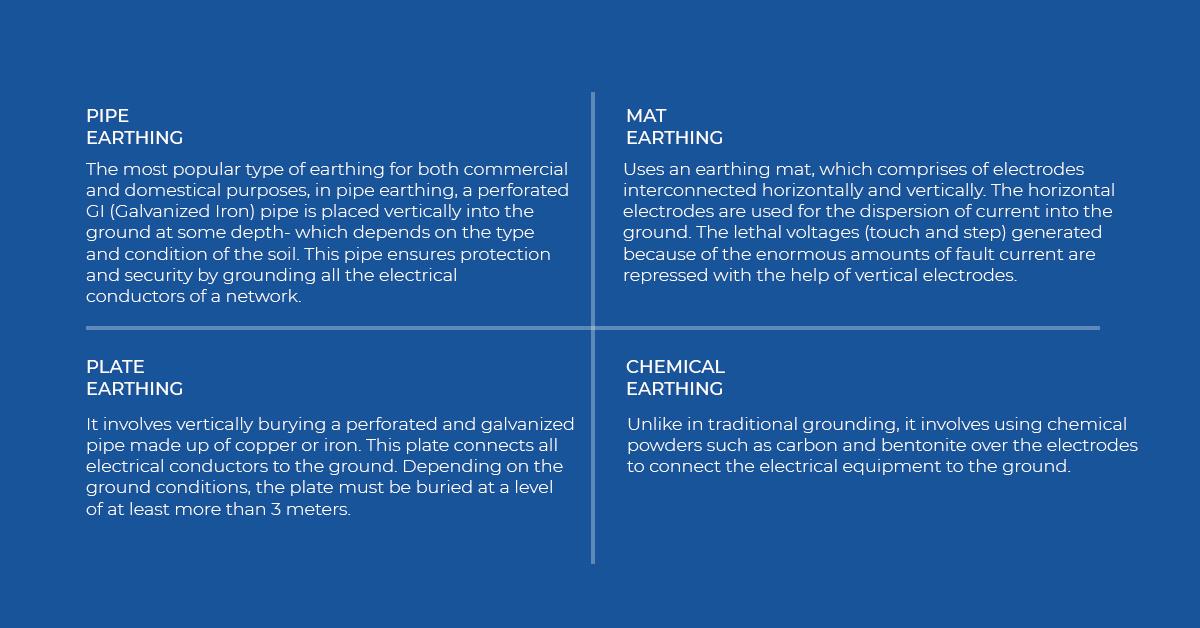
  1. IS 3034: This standard consolidates the information related to earthing & its study such as design, installation, and inspection & maintenance guidelines. In short, it is concerned with factors like:
  • The measurements of the wires, pipes, and plates used in different types of earthing. 
  • The regulated use of chemicals in chemical earthing. 
  • The depth of burying ground to secure the earthing plate from damage due to factors like animals, rainwater, etc.
  1. IEEE 8084: This standard provides information about grounding an outdoor AC substation, either conventional or gas-insulated, i.e., electric grid station. Mainly, it is concerned with factors like:
  • Specification of the recommended design features of the given grid. Its safe limits that can exist in the substation even in case of any faults. 
  • Providing a procedure for designing a safe and practical grounding system based on the requirements of the system.
  • Providing various procedures for measuring and treating soil resistivity.

All businesses and establishments must take care of their assets, including the most invaluable assets- their workforce. At VNT, we provide holistic and trustworthy earthing study without neglecting the required code or regulations to maintain the business standard. With a detailed and personalized study, we ensure that each component is the best for your electrical earthing system. 

To ground all your worries with VNT’s reliable Earthing Study and have your electrical network up and running safely at all times, contact us.

What happens when a module fails in an industrial scale PV solar rooftop installation and goes unnoticed for an extended period? 

The answer is: energy losses that, if left undetected for a long time, convert into economic losses.

Most industrial-scale PV plants equip string combiners and monitoring equipment to detect such failures quickly and minimize the associated energy losses. But what exactly is a String Combiner and Monitoring Box? What other advantages does it offer?

Within this article, we will address the answers to these questions and more.

What Is a String Combiner and Monitoring Box?

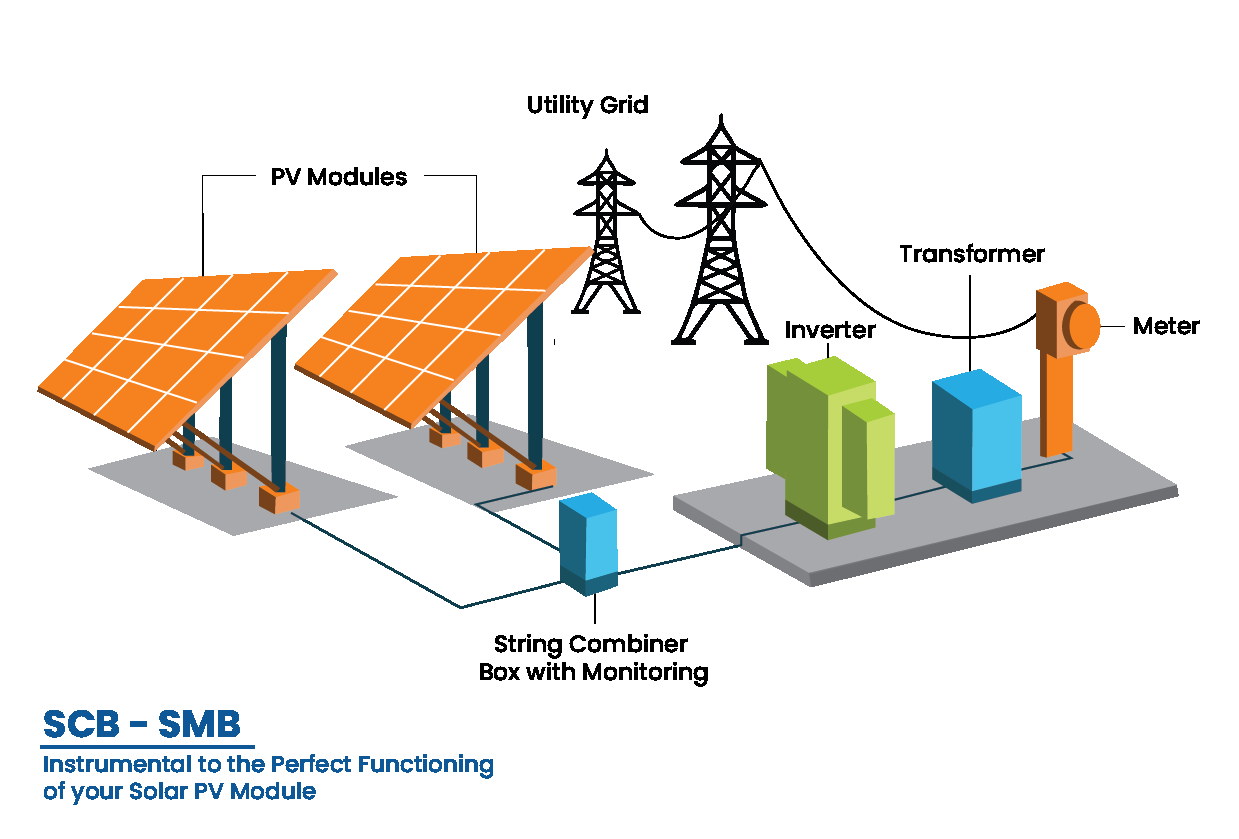
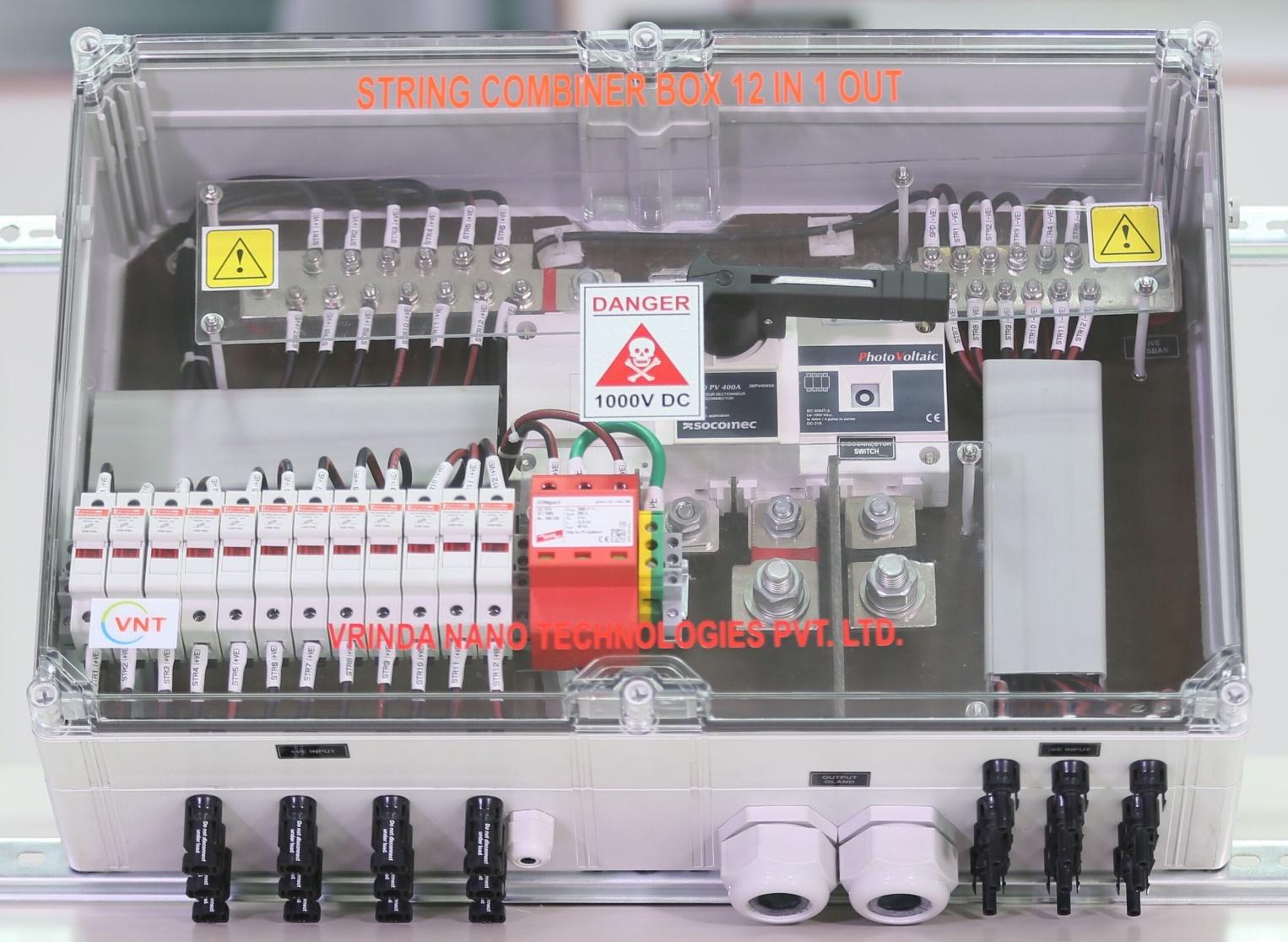
String Combiner and Monitoring Boxes (SCB-SMB) are “smart combiners” that collate multiple strings of solar PV modules to give a single main output to inverters. They are solar junction boxes that consolidate incoming power into a single feed and distribute it to a solar inverter, resulting in wire reduction. In simple words, the combiner box’s function is to bring the output of several solar strings together.  Each string conductor connects to a fuse terminal, and the output of the fused inputs is combined onto a single conductor, which connects the box to the inverter.

This is the most basic configuration of the combiner box. However, once it is connected to the solar PV module, additional features are typically integrated into the combiner box, like disconnection switches, monitoring equipment, remote rapid shutdown devices, etc.

What Makes a String Combiner Box Essential for a Solar PV Module:

While the primary function of a string combiner box is to combine the output of multiple solar panels into a single bus, its real-world applications extend beyond its primary function.

  • Combiner boxes are useful in projects of all scales. Combiner boxes in residential applications can bring a small number of strings to a central location for easy installation, disconnection, and maintenance. In commercial applications, combiner boxes of various sizes find usage to capture power from varying building types. Furthermore, in large-scale industrial projects, combiner boxes enable site designers to maximize power while distributing combined connections while lowering labour and material costs by distributing combined connections.
  • Strategically placed combiner boxes in solar PV modules can help to reduce power loss. The combiner box should be placed between the modules and the solar inverter to maximize output.
  • Solar combiner boxes improve inverter protection and reliability by safeguarding the system from excessive current and voltage overcharge.

Adding Monitoring to the Combiner Box:

With renewable energy production gaining traction worldwide, solar PV modules for collecting solar energy are leading the market in many countries. According to an NPR report, system owners are looking for new ways to keep their PV modules running at peak performance with its widespread adoption. String monitoring is one of the most important ways to keep track of solar PV panels and identify faulty components in the shortest amount of time.

  1. String monitoring on a solar PV module is incredibly significant for quickly identifying potential power losses in the PV generator and ensuring the module’s long-term performance level remains the same. 
  1. With a combiner and monitoring box, you can stay proactive with the least amount of effort. String Combiner and Monitoring boxes supervise ongoing processes at the site and detect if any components have become faulty in real-time. They are especially beneficial when multiple processes fail, which are undetectable to the human eye. For this purpose, our high-performance combiner boxes include an in-built monitor, which streamlines the supervision process, reducing the risk of damage due to leaks, loose connections, and other issues.  

What Should Be Considered While Selecting a Combiner Box?

The String Combiner Box is the first piece of equipment connected to the solar module; thus, its quality should be the most crucial consideration when choosing one. The selected equipment must be thoroughly inspected to ensure that it complies with all the applicable certifications and the manufacturer is an ISO-certified company.

Before selecting a combiner box, it’s also vital to evaluate the project’s technical requirements. Because our resilient combiner boxes are designed to last the life of the solar project, it’s critical to determine what specifications are required so that the combiner and monitoring boxes can be customized to meet that criterion.

Why Should You Choose VNT?

Our combiner box houses multiple vital components such as fuses, disconnector switch, surge protection device, cables & busbars. Furthermore, our string monitoring boxes (SMBs) are a more advanced version of SCBs in which the PCB board/Monitoring board is consolidated into the SCB, effectively fulfilling the following two purposes:

  1. The combination of multiple strings of solar PV modules provides a single main output to inverters.
  1. Monitoring various parameters such as input string electrical parameters, temperature, fuse status, SPD status, disconnector switch status, etc.

Our string combiner with monitoring box produces precisely measured value recordings of all electrical indicators, allowing you to monitor your solar PV plant safely and accurately. Our string combiner and monitoring boxes have a 100% success rate, so when you choose VNT, you are guaranteed to acquire competent and durable equipment.

What Our Highly Engineered Combiner with Monitoring Box Offers:

Our strict engineering design standards and world-class manufacturing facility at VNT enable us to build superior quality products with unrivalled reliability at a competitive price, ensuring a long product life even in challenging environmental conditions. The following set of features marks our solar combiner and monitoring box apart from the competitors in the market:

  • Fully Customizable: Upto 32 PV string inputs.
  • Precision: Measurement accuracy of ±0.5%
  • Variety: Available from 600 to 1500 VDC
  • Competent: Capable of individual string level monitoring
  • Quality Assurance: In compliance with IEC 61439-1&-2 standards and 100% factory tested in compliance with ISO 9001:2015
  • Competent: Integrated Surge protection devices, built-in touch-safe fuse and fuse holders, DC isolator, among many other components.

Additionally, we back our product with commissioning, maintenance and service support to achieve maximum yield from a solar plant across its lifecycle. 

VNT- A Trusted Name in Solar Solutions

As the photovoltaic market expands due to advancements in photovoltaic (PV) modules, so do the manufacturing advancements in combiner boxes regarding reliability, added features, and scalability. VNT has designed, delivered and installed its string combiner boxes at various industrial-scale projects throughout India. Our SCBs enable you to monitor and measure the system performance in real-time while also ensuring exceptional system safety.

Our String Combiner and Monitoring Boxes are spread across India, installed in solar plants under challenging terrains, high altitudes, and coastal areas, demonstrating our expertise in the solar domain. As key players in this field, we design and engineer solutions for our customers while keeping longevity and excellence at the forefront of our operations.

Our innovative design and exceptional quality in solar solutions were recognized and honored in 2019 when we received the Business Excellence Award in the “String Combiner Box Manufacturer of the year” category.

Contact us to learn more about how our industry-leading solutions in various verticals can help you grow your business.